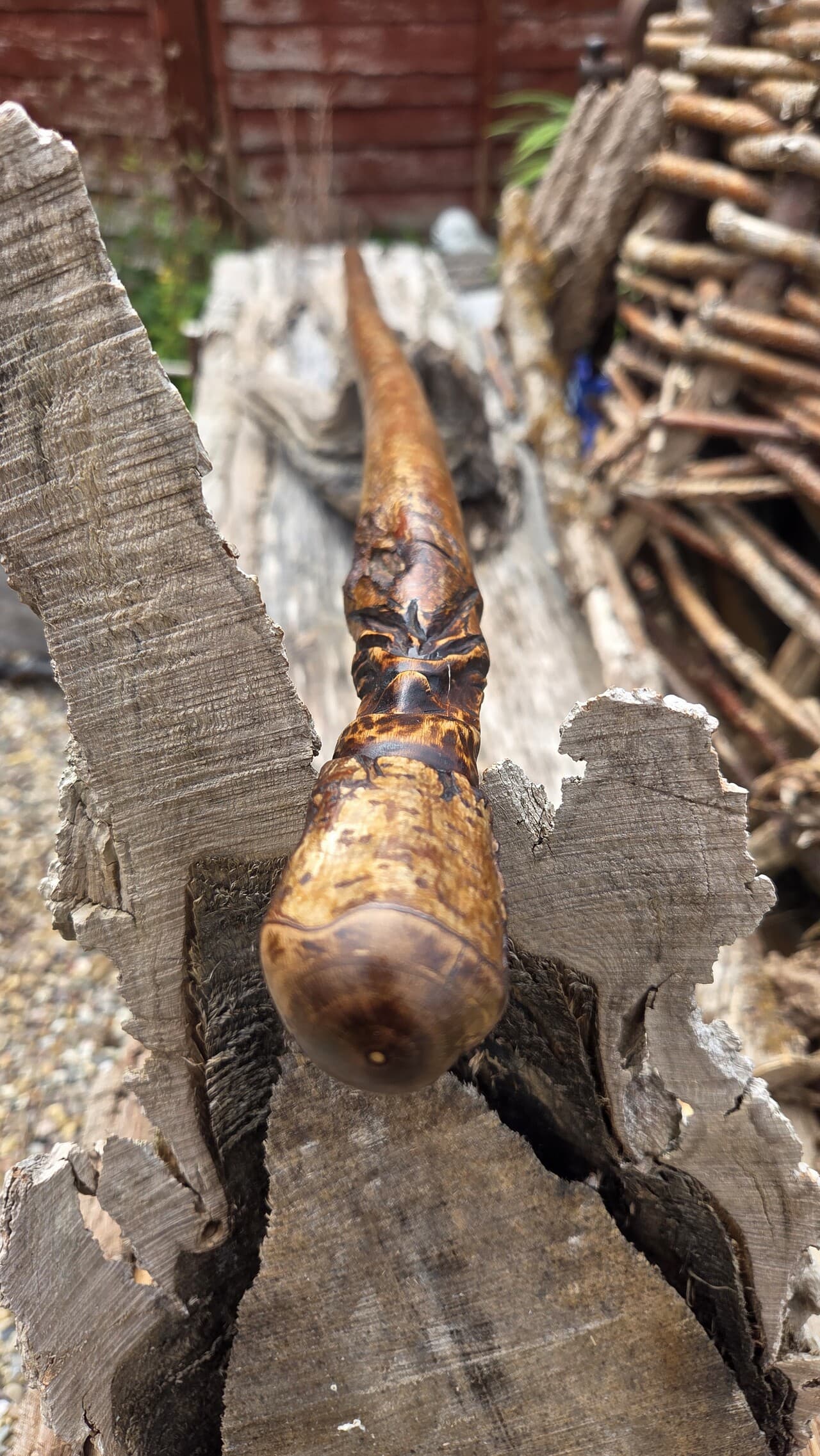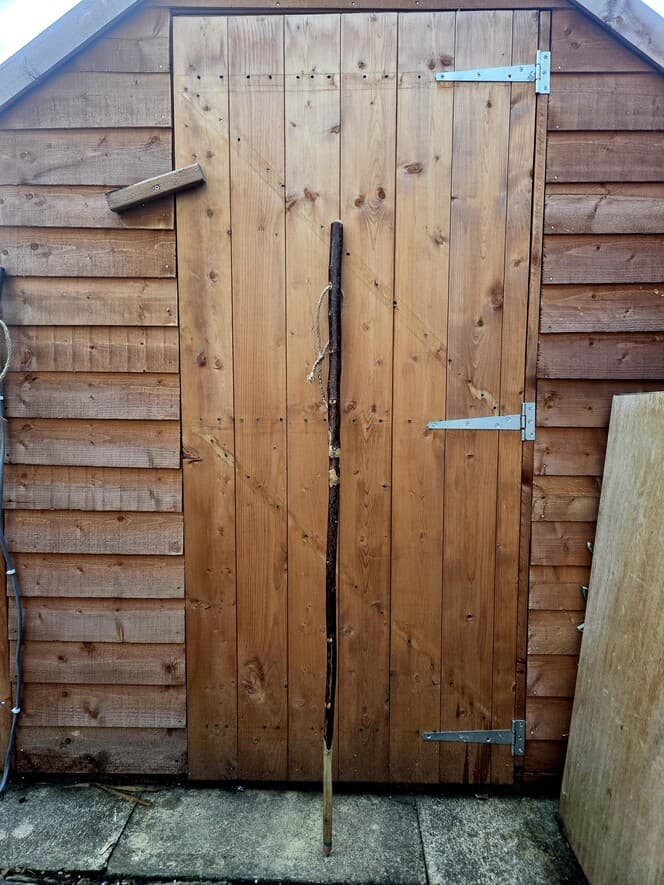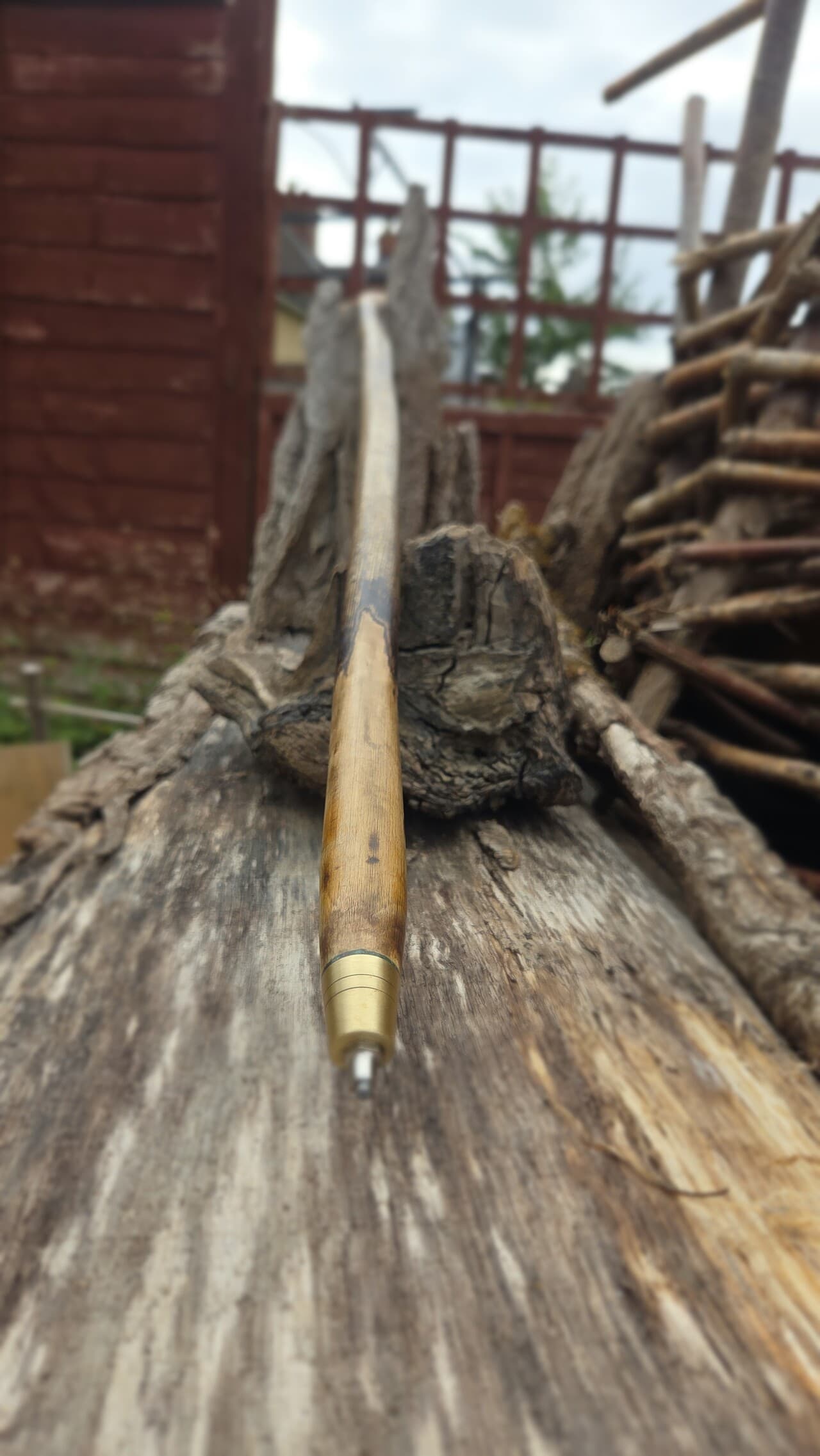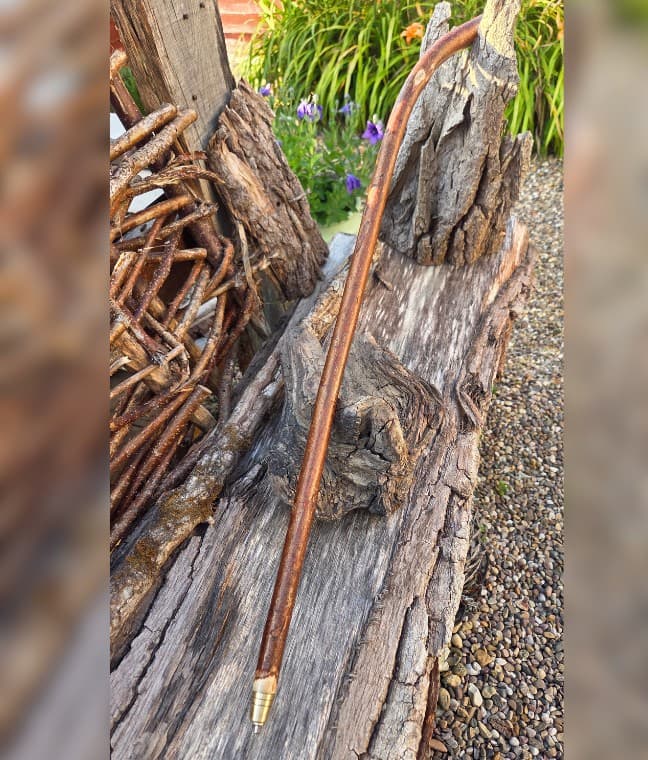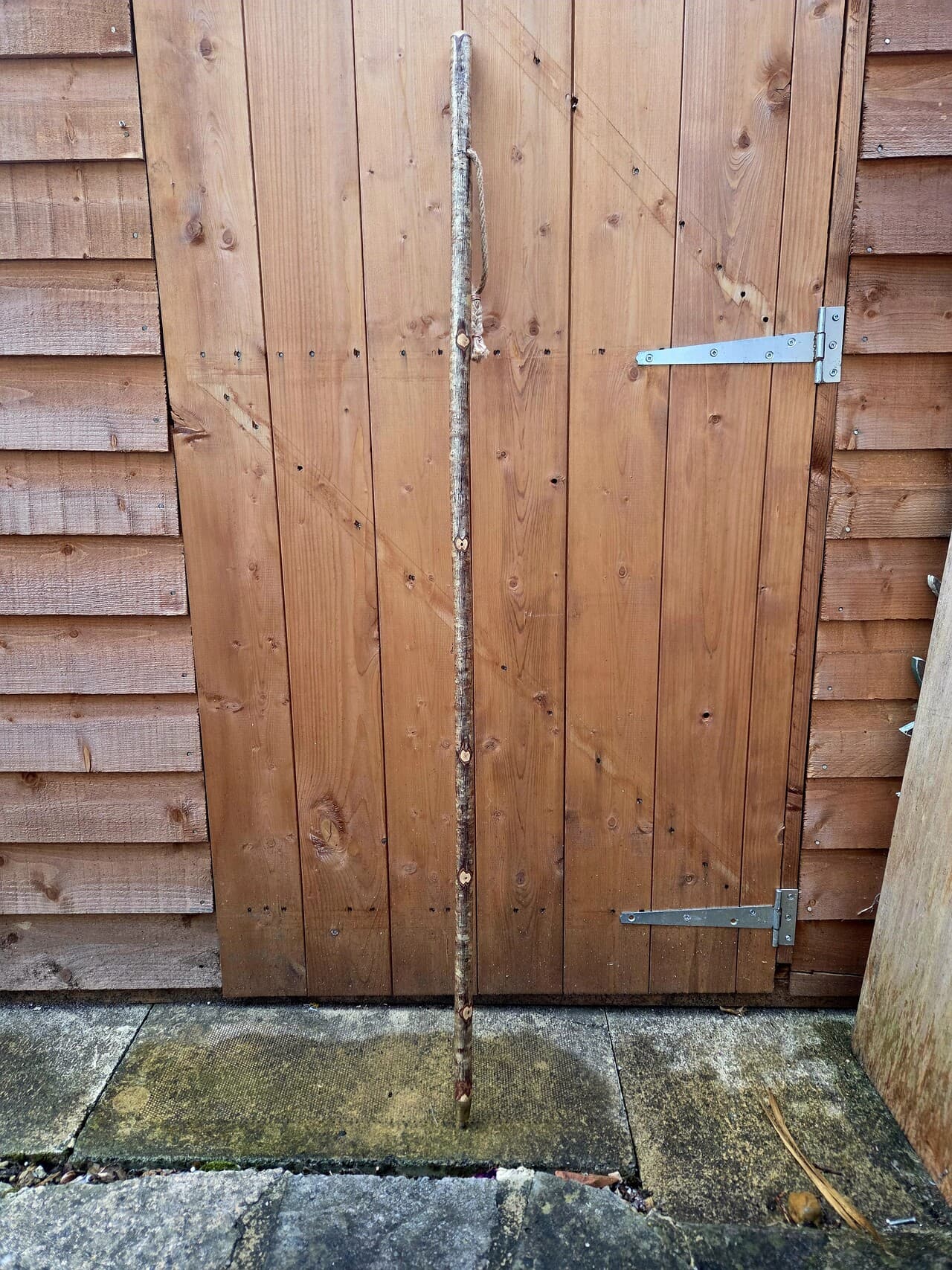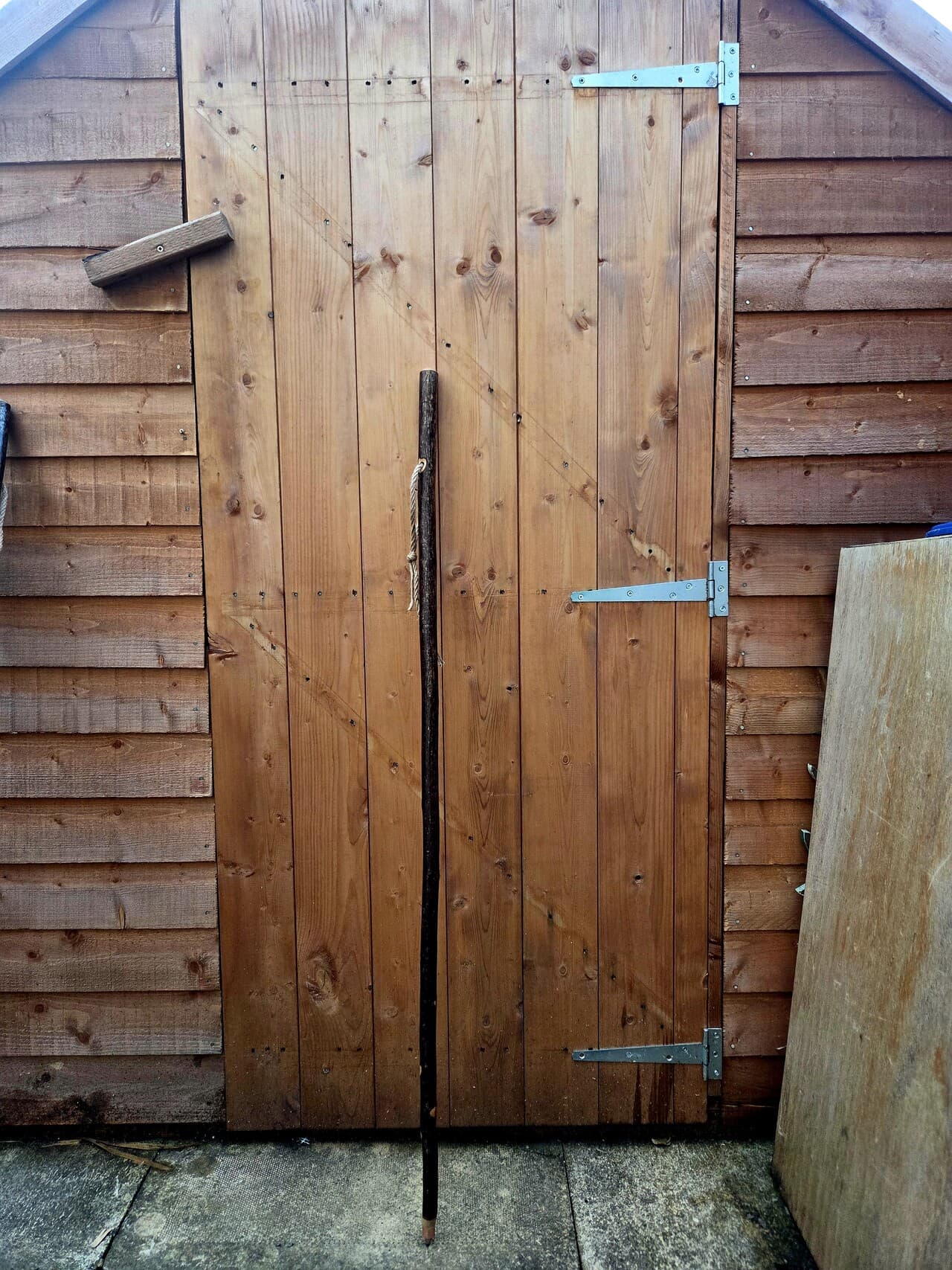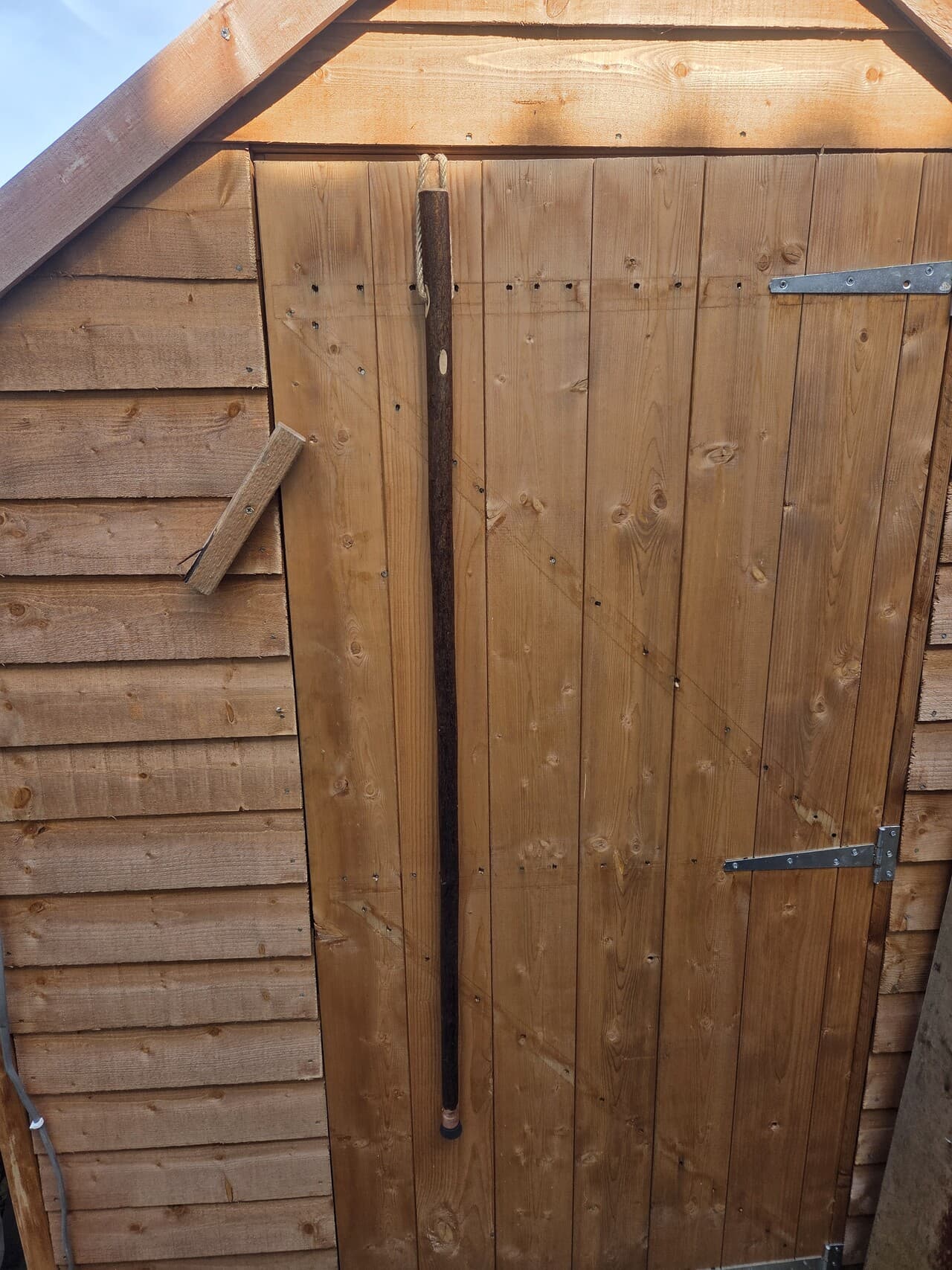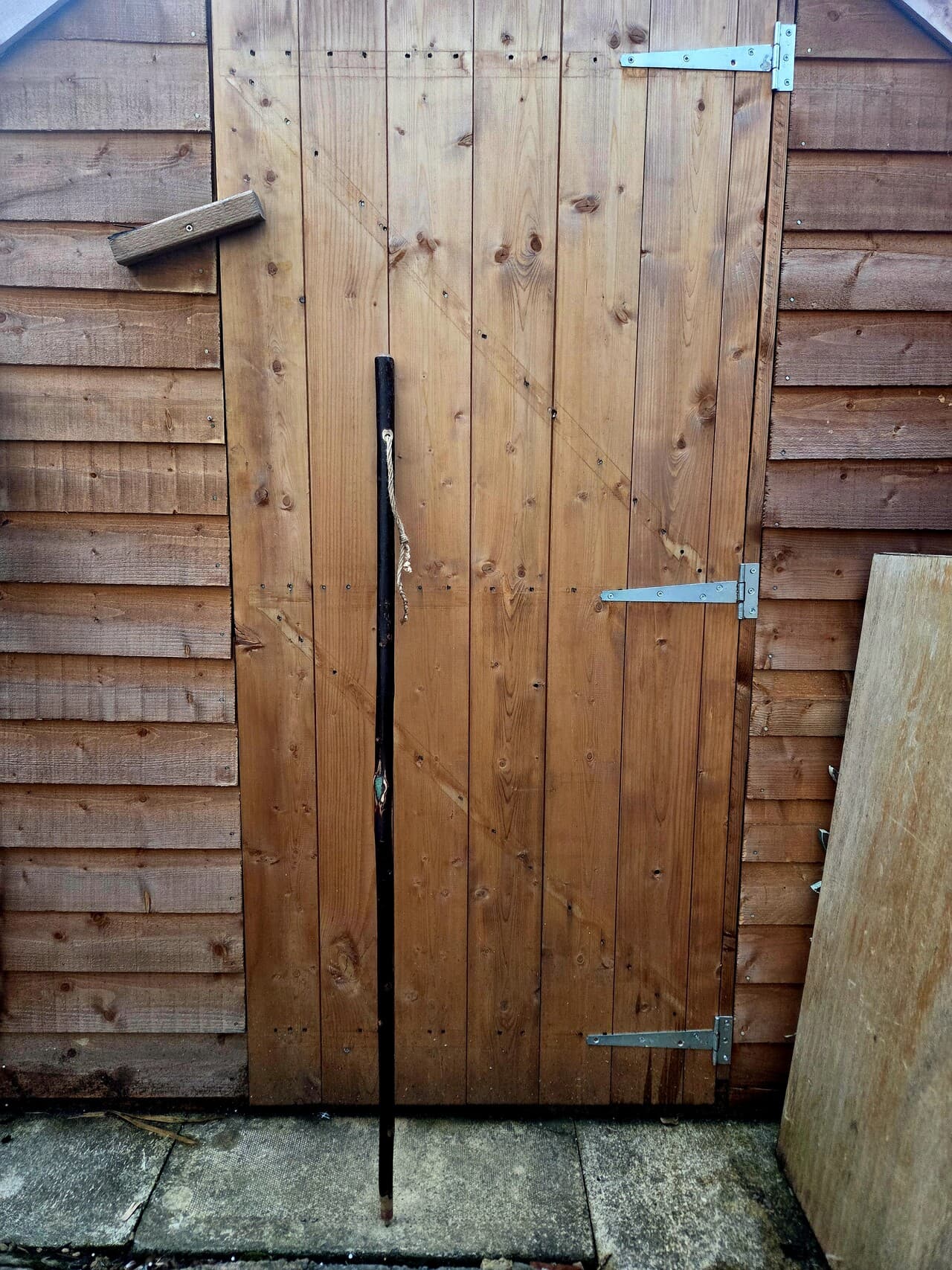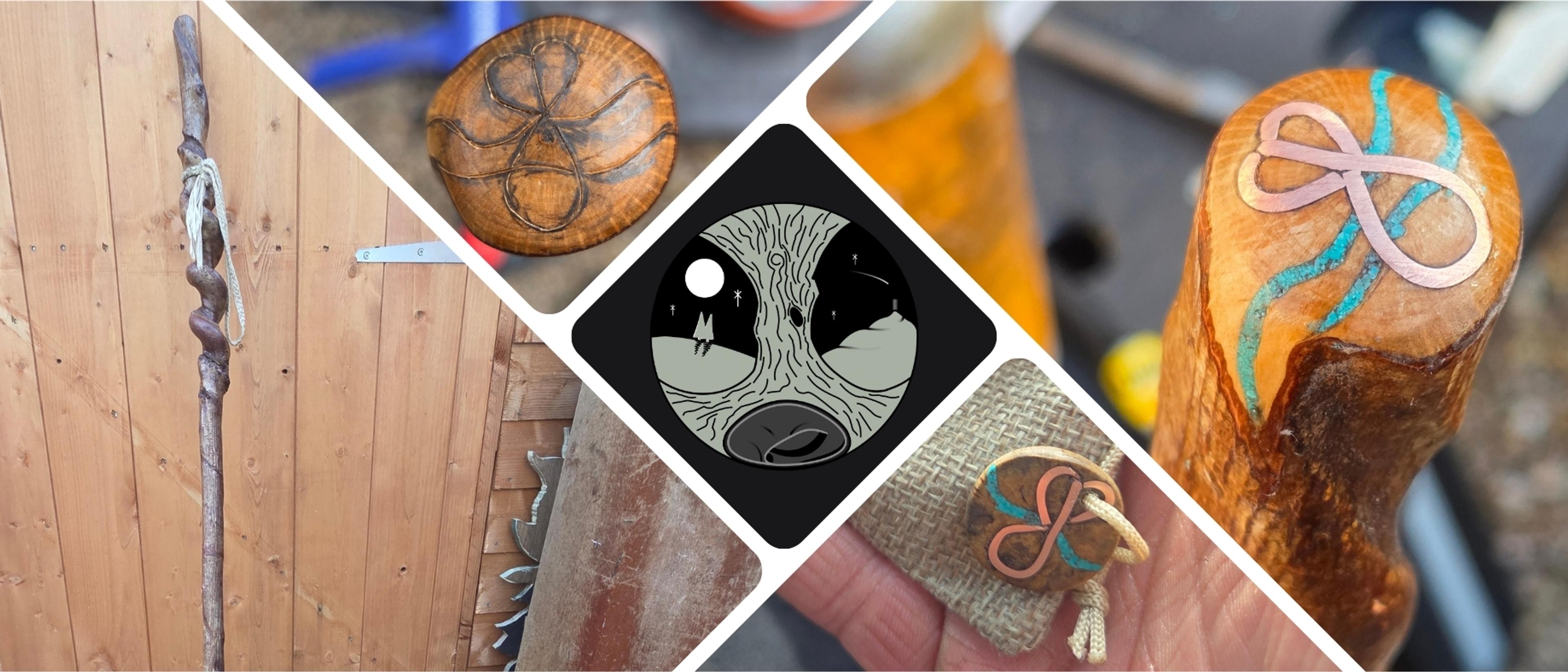
Give someone a stick and they'll take it out with them every morning, whatever the weather. It earns its keep on every lap of the field: something solid to lean on, good for poking through a hedge, or just for having in hand while the dog does whatever it's decided to do that day. And because each one comes from a single branch, it won't look like anyone else's.
I coppice most of the hazel myself at a conservation project in Tyley Bottom, Gloucestershire. The rest comes from a named supplier in Somerset — hazel, yew, blackthorn, hawthorn from estate coppice. Everything's finished by hand in Wotton-under-Edge: Danish oil first, then beeswax. It's a traditional finish — a lot of makers use varnish or epoxy resin, which gives a harder seal. Oil and wax needs reapplying every so often and the wood picks up its own scars and colour with use, which I think is the point of a stick made from a real branch.
I use natural stains such as walnut husks, oak galls, tea, coffee and Aqua Fortis to enhance the figure in the grain.
A stick for every kind of walk
Slim hazel sticks suit pavements and field paths — the everyday morning kind. Hiking sticks are sturdier, built for longer routes and rougher ground. Thumbsticks have a shaped rest near the top for your thumb, and suit anyone who leans on the stick properly or is out for a longer stretch.
The benefits of walking with a stick
For any walker, a third point of contact steadies you on uneven, muddy or sloped ground. On hills or longer routes it takes load off the knees and hips too, which is why hikers carry them as much as anyone else. For someone recovering from injury, or managing something that affects balance or joints, a stick can make a real difference to getting out regularly — ideally alongside guidance from a GP or physio.
(General information, not medical advice — for a specific mobility condition, a GP or physiotherapist can advise on the right height, grip and type.)