
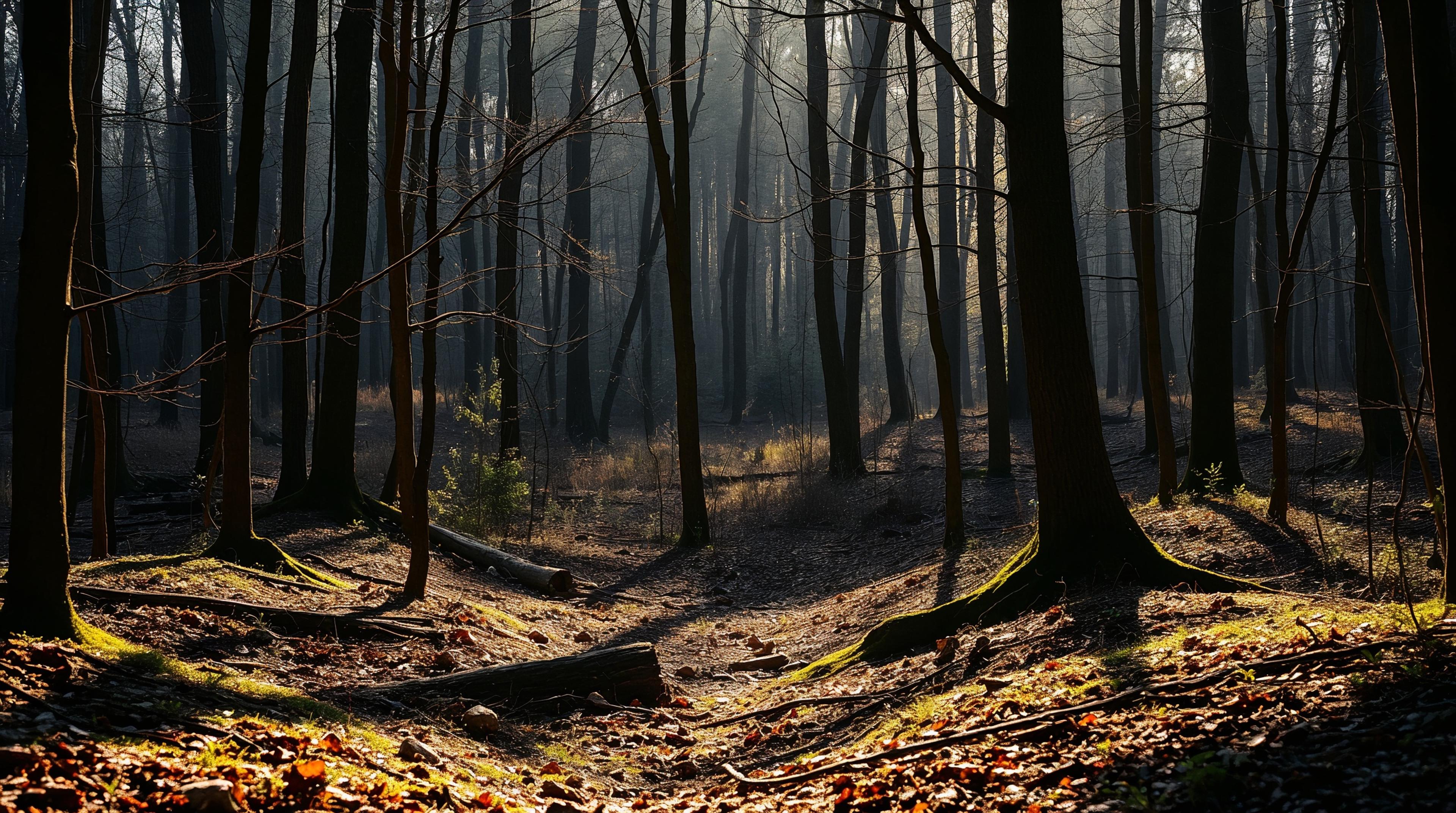
Hello friend! Today I thought I’d write a bit about my process and why I don’t buy new timber for Bough & Burrow products. Using wood that’s already in circulation keeps material out of landfill and reduces demand on standing trees. Reclaimed material is also far more interesting (if a little more labour intensive) to work with — wood that’s lived a life has character that commercial timber simply doesn’t. Another great advantage is that the material itself is mostly free, you just have to have an eye for spotting it.
Where the wood comes from
A lot of what I use comes from hazel and willow coppice — both grown at 100 Acer Conservation Project, a rare wet woodland in the Cotswolds where I’ve been volunteering for around 3 years.
As well as coppiced material, I am always on the lookout for wind-fallen wood, by-products of tree surgery and salvaged materials from a variety of local sources. Some of my best-selling pieces have been wood slice mosaics mounted on boards cut from a gate that had been standing since the early 1990s — itself built from old pallets. The wood had lived a life as a pallet in logistics and warehousing before becoming a gate, with coat after coat of preservative applied over the decades. By the time I cleaned it up, the patina was gorgeous. That kind of surface takes time and is very hard to reproduce authentically.
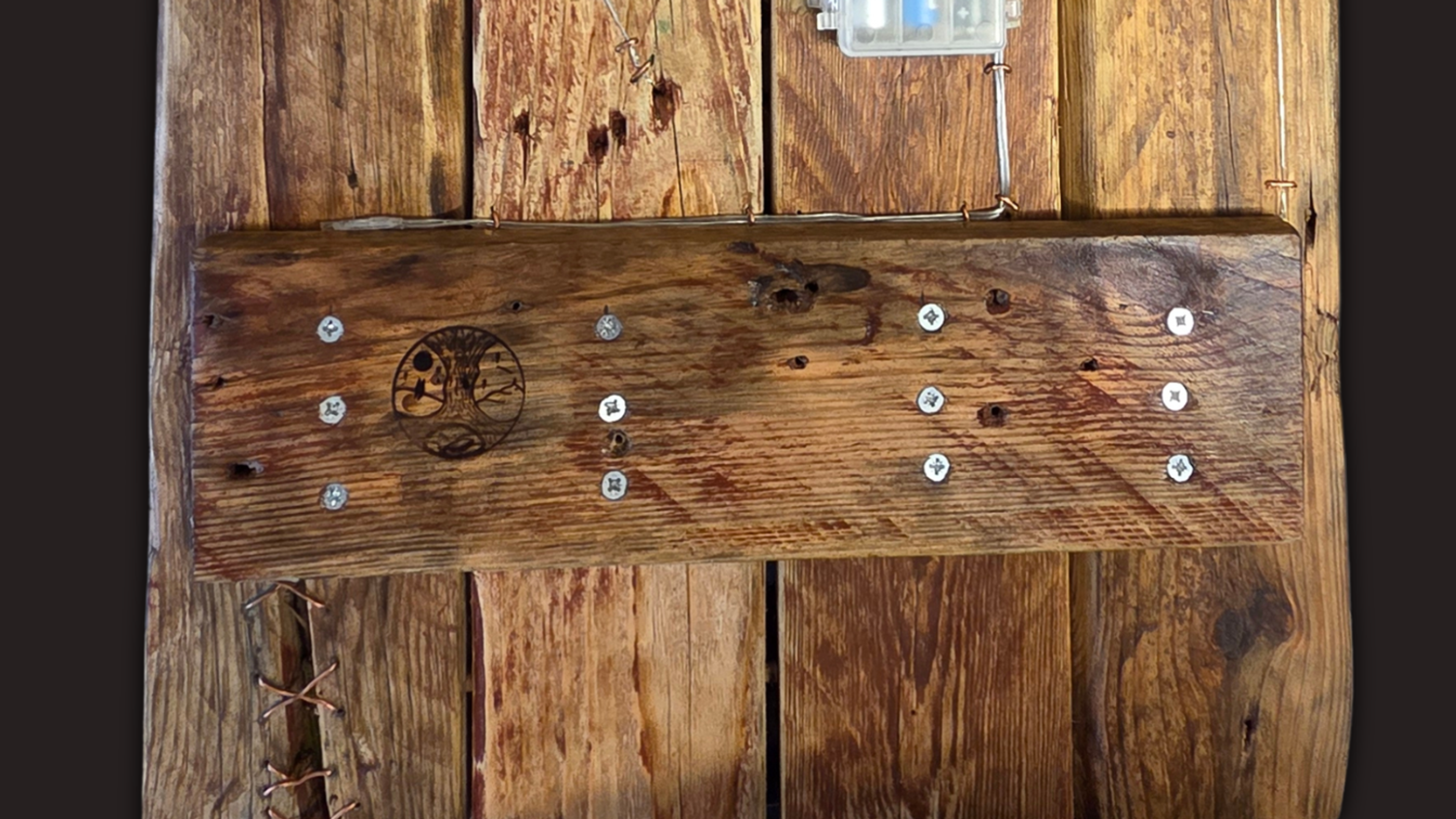
It can take more effort to get to a workable piece of wood. Stripping old paint, waiting for something to season, treating wood worm, removing rotten wood or working around a knot that a timber yard would have rejected — that’s part of using this material. The knot a factory discards, the crack that threatens to split the thing in two often become a feature of the finished piece.
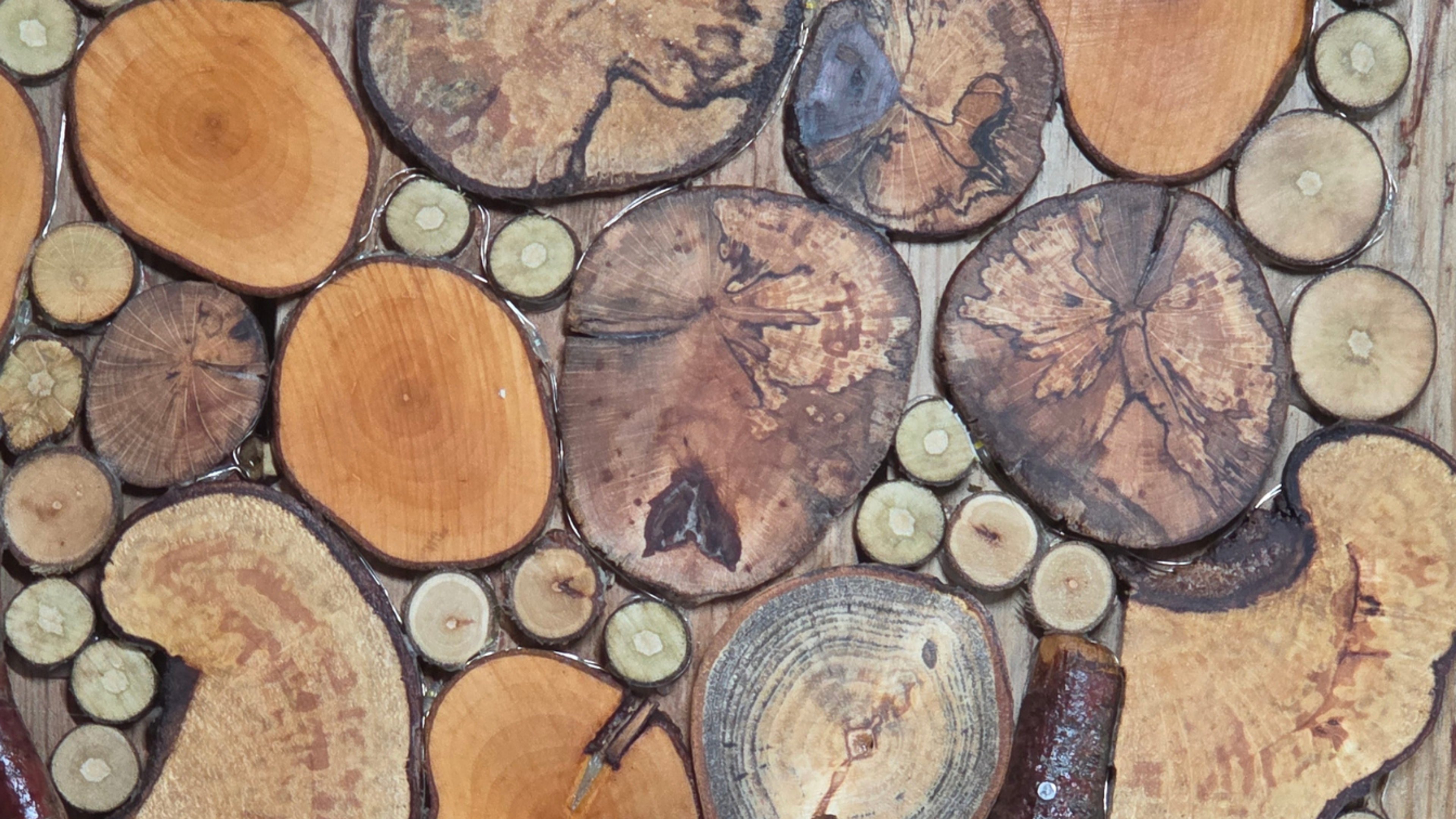
Fungal growth in wood left to rot creates spalting, patterns that look stunning when exposed, finely sanded and treated to a few layers of Danish oil and beeswax.
The Problem With “New” Wood
The furniture industry gets through over a billion cubic metres of wood a year. Some of that comes from well-managed forests. A lot of it doesn’t — and behind the average mass-produced wooden item is a supply chain that involves clear-cutting, intercontinental shipping, chemical treatments, and the routine rejection of anything outside factory tolerances for straightness and uniformity.
Community Wood Recycling calculates that each tonne of wood reused saves around 500kg CO₂ equivalent. DEFRA estimates that wood sent to landfill generates 925kg CO₂e per tonne through decomposition and methane release. Forests absorb around 2.6 gigatons of CO₂ annually — roughly a third of global fossil fuel emissions — and old-growth trees store significantly more carbon than managed plantations.
The majority of the wood in Bough & Burrow pieces is sourced within a 20-minute walk of where I live and work. Everything is finished with natural oils and beeswax, and orders go out in reused packaging. Plus, 2% of revenue from online purchases goes to carbon removal as part of Stripe Climate
If you'd like to see what this looks like in practice, take a look at the Bough & Burrow collection — every piece comes with its own material story.
The next post goes into the repair side of things — copper wire, molten metal, and why broken doesn't mean finished. Read it here.