
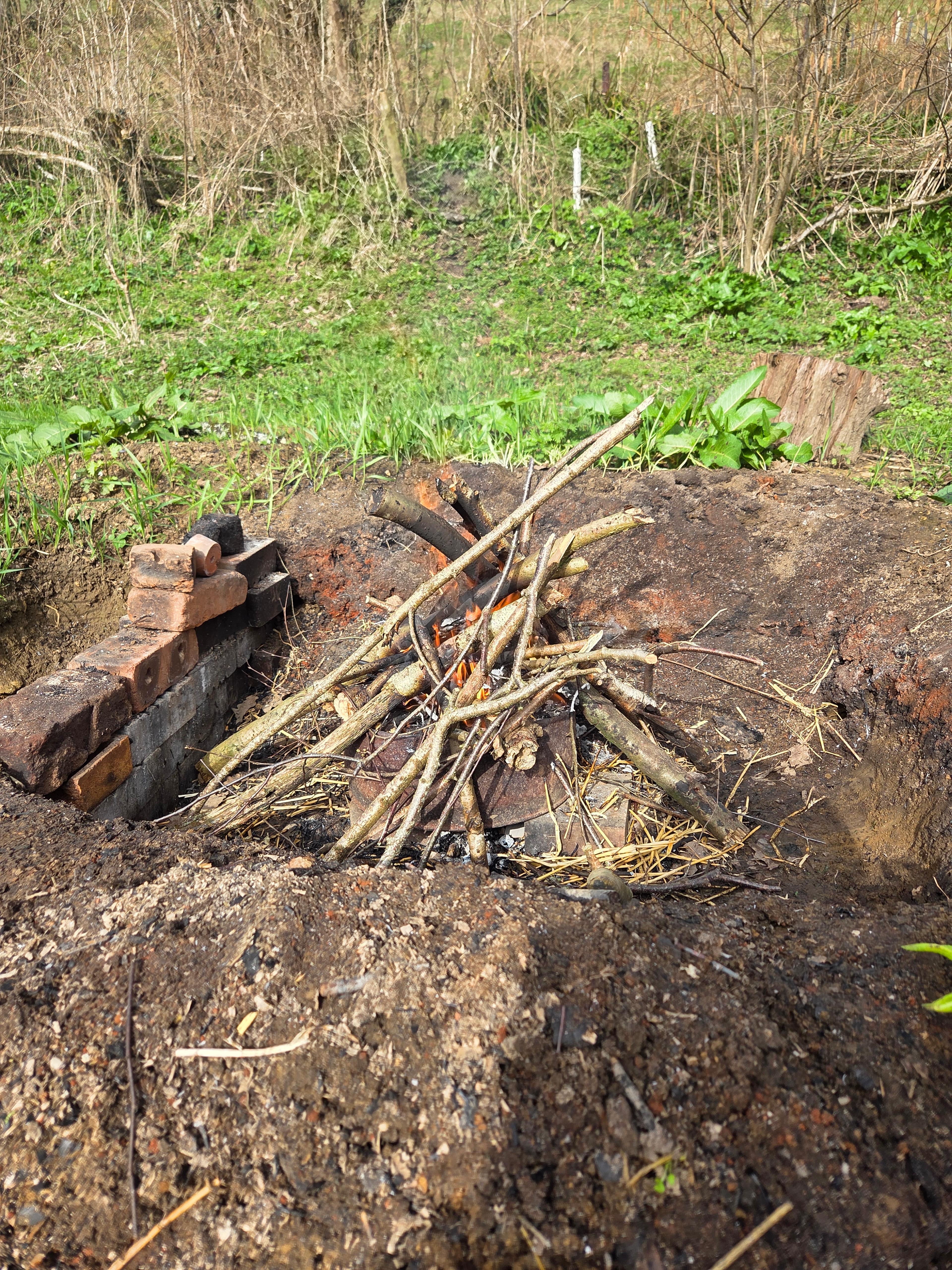
I've been wanting to make charcoal for some time and last week I bought a Kadai charcoal maker — a small steel retort designed to sit in a fire and convert wood into charcoal without it actually burning. The wood goes in, the lid goes on, it gets sealed up and placed in the flames. The heat drives off moisture and volatile gases through two small chimney ports, and what's left — in theory — is pure carbon. Artists' charcoal.
The plan is to make drawing charcoal from willow and hazel coppiced at 100 Acer. Willow is the traditional choice — it's soft, marks lightly, erases cleanly, and is what you'll find in most commercial charcoal sets. Hazel is less common but apparently produces a darker, warmer line with more smudge to it. Once I've got the process dialled in, I want to get a small handful of local artists to test both and give me proper feedback before I start selling anything. Small batch, sustainably sourced, from wood I've cut myself — that's the idea.
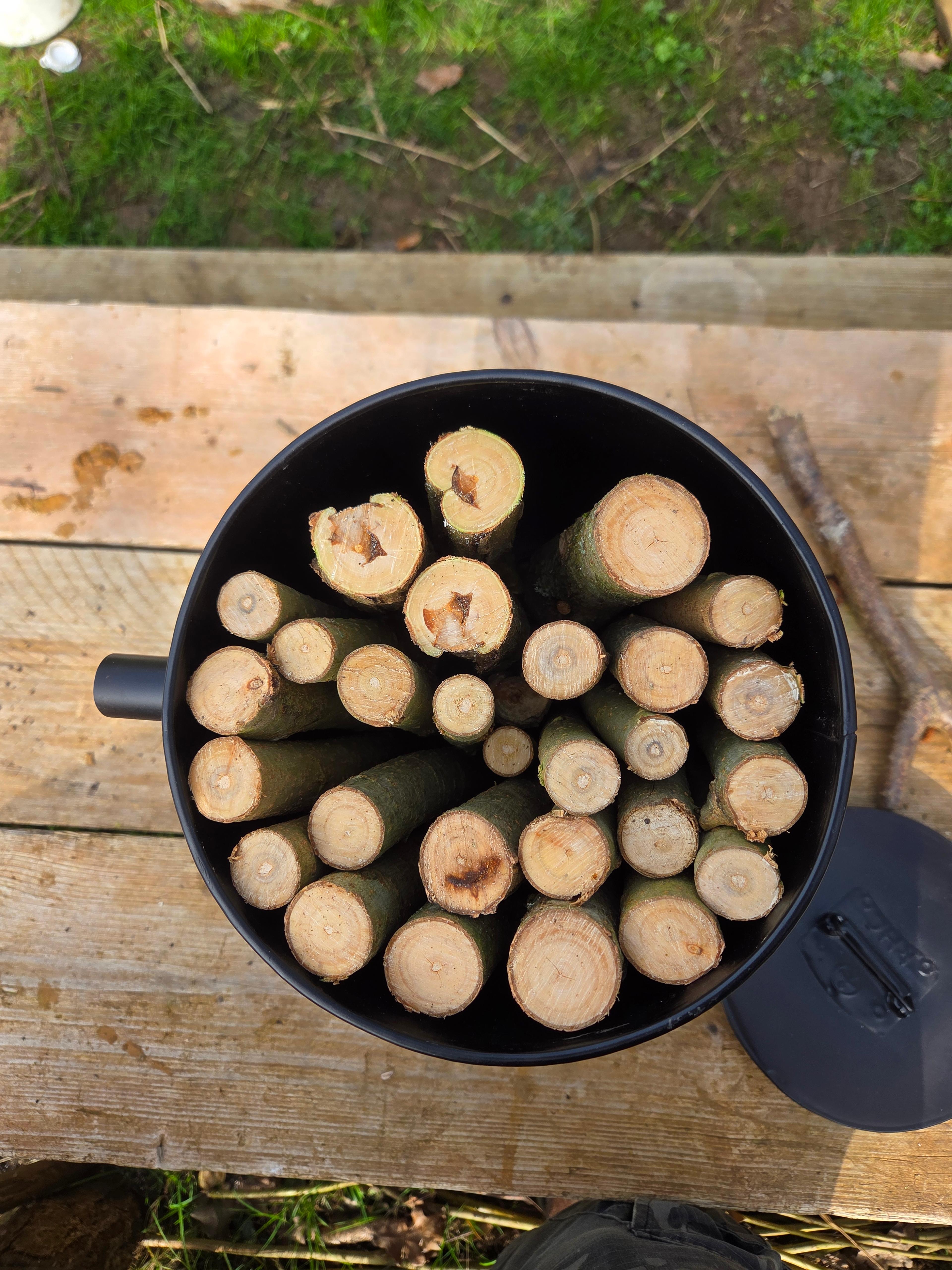
Today was the first burn. I packed the retort with willow cut about three weeks ago from our coppice stools, sealed the end caps, and got it into a decent fire. Looking down into the retort beforehand, the stems were tightly packed — good uniform sections, which should in theory produce consistent sticks.
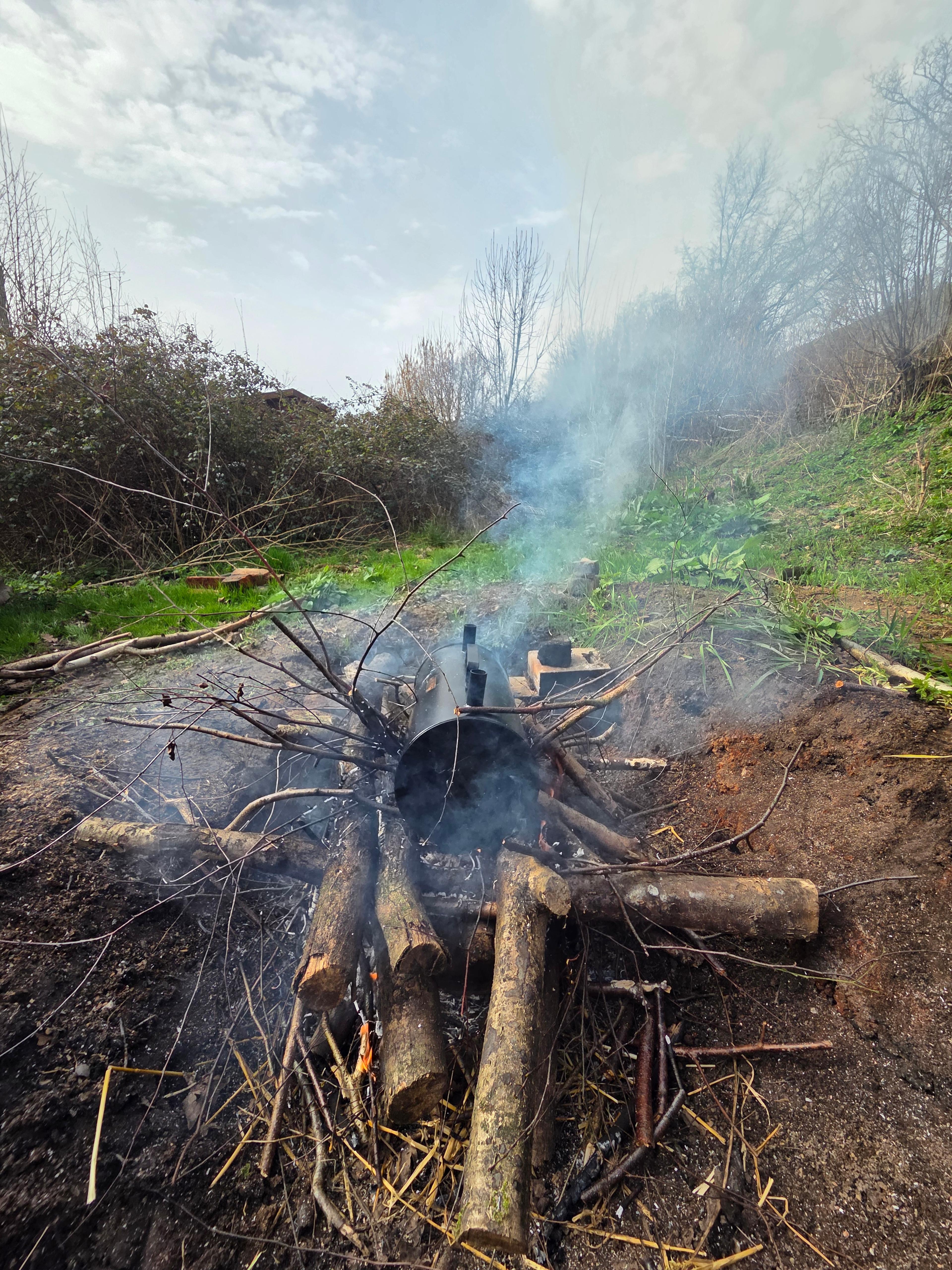
It ran for about three hours. And that's where I started to have doubts.
A lot of vapour was escaping from the end caps rather than through the chimneys. A clear sign of poor seals, and the Kadai's end caps were not especially tight out of the box. But the volume of vapour was also telling — wet wood produces far more steam and gas than dry wood, and my moisture meter had the willow sitting at 28%. That's higher than ideal. Most guidance suggests getting below 15-20% for a retort burn to work properly.
A friend who has the same retort told me he's used green wood successfully, which is why I didn't season it first. His results gave me confidence. But there are a lot of variables — ambient temperature, fire temperature, how long the wood has been cut, the specific moisture content on the day — and 28% might just be too wet for a three-hour burn to fully carbonise the wood.
I'm not writing today off as a failure. It was a first burn, and firsts teach you things. I already know two things I'll do differently next time: use more seasoned wood, and improve the seal at the ends of the retort. Neither is a difficult fix.
The retort is still sealed. I'll open it tomorrow and find out what's actually in there.