
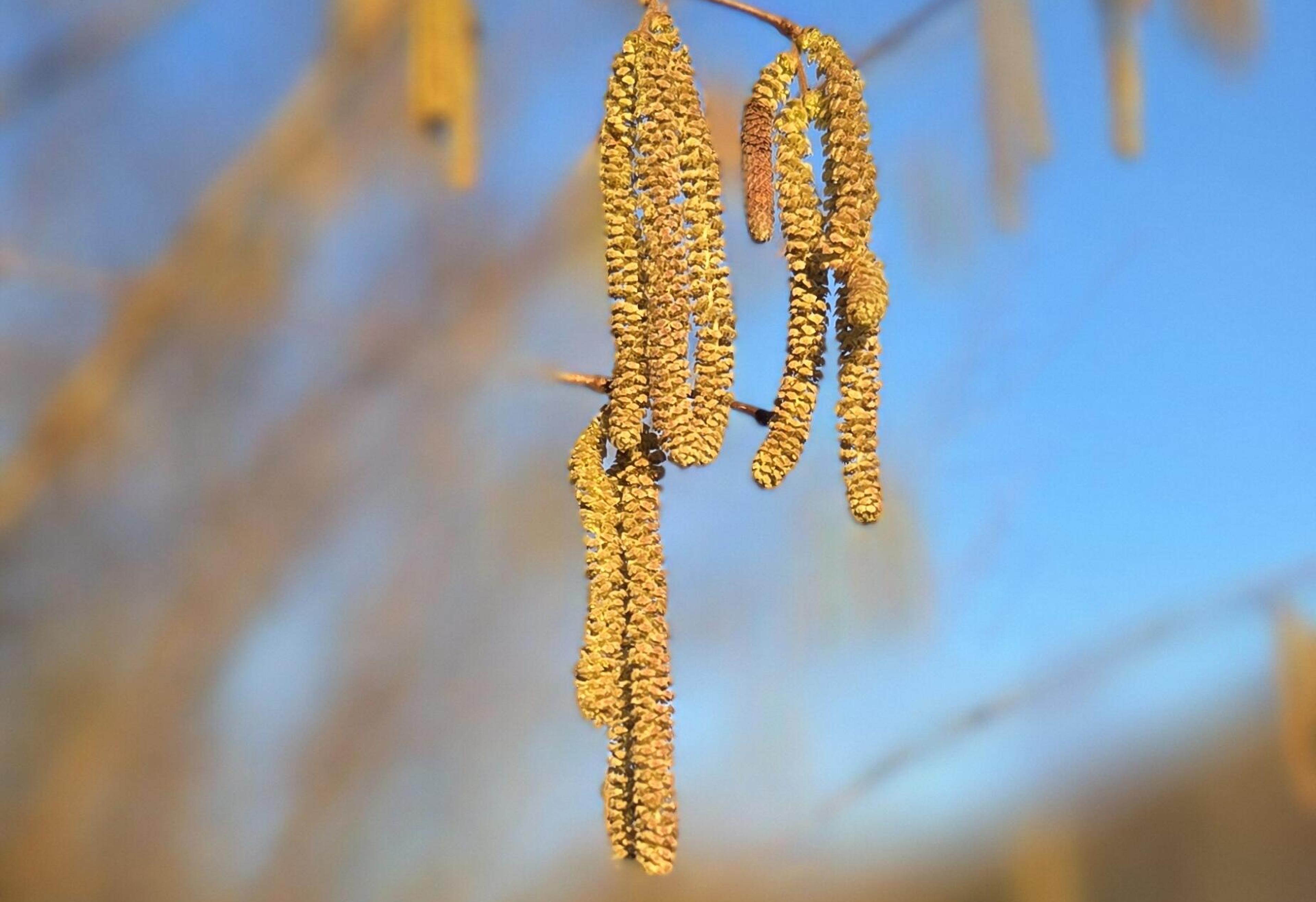
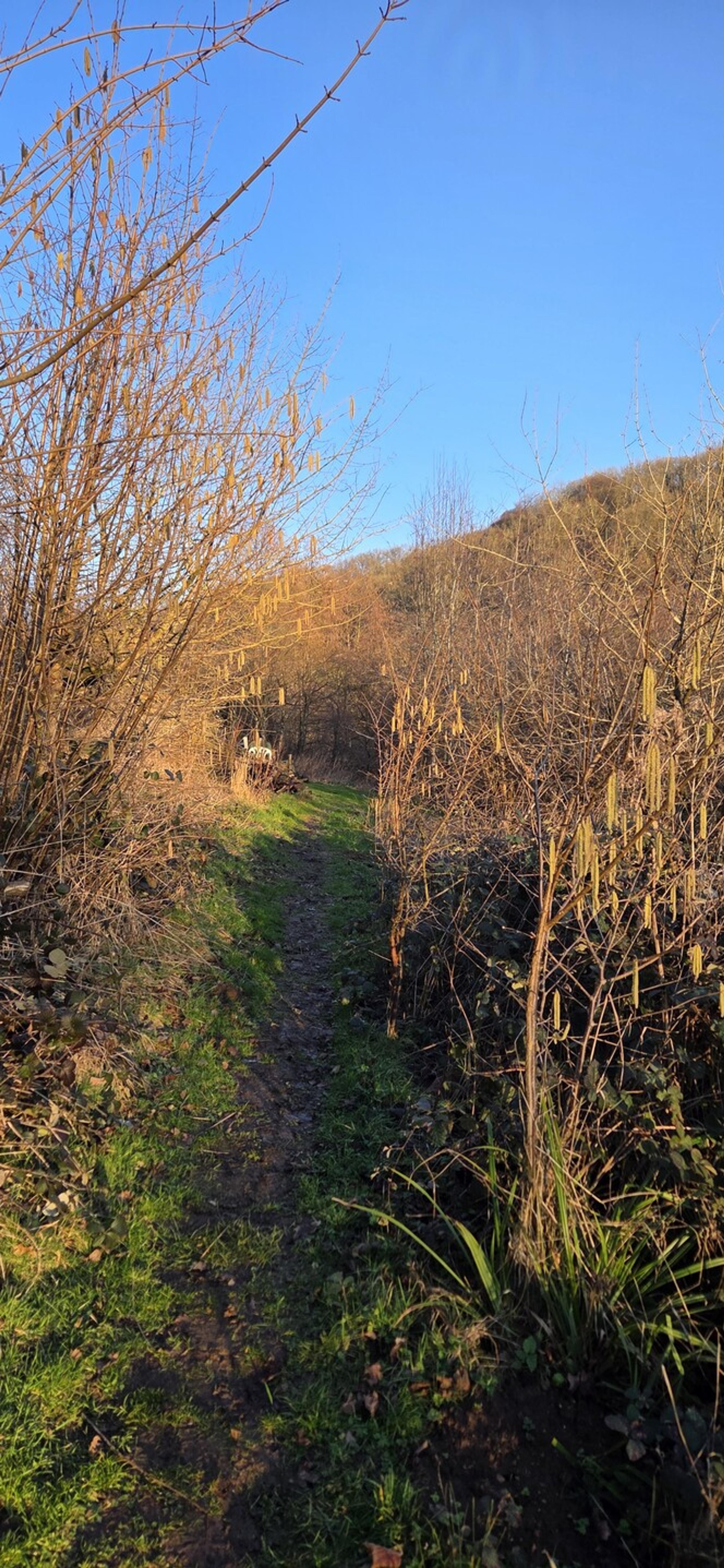
The winter sun hung low through the trees this afternoon, casting long shadows across 100 Acer as I pottered . February shouldn't feel like this – mild enough to work without layers, the air carrying something that felt more like March than deep winter. But there it is: spring announcing itself through pale yellow catkins dangling from every hazel branch.
The work was simple, satisfying. Clearing coppiced stems, sorting through the regrowth, bundling hazel and willow into manageable bundles. The kind of task where your hands know what to do and your mind can wander – or settle, depending on what the day needs. Today it settled. There's something about working outdoors with your hands – the rhythm of it, the physicality, the complete presence it demands – that quietens everything else. No screens, no notifications, just wood and weather and the work itself.
I've come to recognise these afternoons for what they are: essential maintenance, not just for the woodland but for myself. There's solid research behind what I feel instinctively – that time spent in nature, doing meaningful physical work, has profound benefits for mental health. The Japanese have a word for it: shinrin-yoku, forest bathing. But this goes deeper than passive presence. This is active engagement, hands-on contribution, the satisfaction of visible progress and tangible results.
The hazel catkins were everywhere, those delicate lamb's tails catching the light as they swayed. They're always the first real sign – not just that spring is coming, but that it's already begun its quiet work underground, in the sap, in the lengthening days. Other trees were showing their hand too: tight buds swelling, that subtle shift in colour that happens when dormancy starts loosening its grip.
I took photos between tasks. The light was too good not to – that particular quality you only get on mild winter afternoons when the sun's still low enough to be kind. The kind of light that makes you want to capture it, even though you know it won't quite translate.
This is what volunteering at 100 Acer gives me: material for Bough & Burrow, certainly – these hazel bundles will become walking sticks, hurdle zails and weavers, wands and probably something I haven't imagined yet. But it's more than that. It's time spent working with my hands on this particular piece of land, watching it change through the seasons, being part of the cycle of growth and harvest and regrowth.
The cleared coppice will shoot again. The hazel responds to cutting the way it's responded for thousands of years of traditional management – vigorously, gratefully almost. This is the genius of coppicing: it's not extraction, it's participation in a renewable cycle. Cut a hazel stool and it responds by producing multiple new stems, storing more carbon in the process. The woodland floor floods with light, wildflowers return, insects thrive, birds follow. Traditional coppice woodland supports more biodiversity than untouched forest – a counter-intuitive truth that shows how human intervention, done right, can enhance rather than diminish.
And there's something circular about it all. I harvest hazel that will become walking sticks for people exploring the Cotswold Way. Those sticks carry with them this afternoon's sunshine, these catkins, the knowledge that their making has actually increased the woodland's capacity to store carbon and support life. Not despite being used, but because of it.
As I worked, bundling and stacking, I kept thinking about connection – to this land, to these trees, to the old ways of working with wood that I'm slowly learning. Every piece I make for Bough & Burrow carries some of this with it: not just material, but meaning. The mental clarity that comes from an afternoon spent this way somehow transfers into the work itself.
By the time I finished, my hands were scratched from thorns and my shoulders pleasantly tired. The kind of tired that comes from good work, not stress. I stored the bundles, packed my tools in my bag, took one last look around, and headed home walking into the low sun and a dusky haze, carrying with me the feeling that I'd spent the afternoon exactly where I needed to be.
If you're reading this and feeling overwhelmed, disconnected, or simply worn down by the pace of modern life – I can't recommend strongly enough finding your equivalent of this. It doesn't have to be woodland management. But find something that gets your hands dirty, that connects you to natural cycles, that produces something tangible. Your mind will thank you for it.